AI Agent Deployment Playbook: Lessons from 49 Expert Interviews
SaaStr replaced 20 SDRs with AI agents and saw pipeline increase. Intercom's Fin hit $100M ARR handling customer support autonomously. These aren't hypotheticals -- they're results discussed across 49 Lenny's Podcast episodes and 3,686 listener comments. Here are the practical frameworks for deploying AI agents that actually work in production.

In this guide:
What Are the Different Types of AI Agents?
AI agents fall into three distinct categories: chatbots, copilots, and autonomous agents, each with different levels of autonomy, risk, and business impact. Across 49 episodes, we identified these three types being deployed in production, and understanding which fits your use case is the single most important decision in agent deployment.
Understanding which type fits your use case is the single most important decision in agent deployment. The wrong category choice leads to either underinvestment (building a chatbot when you need an agent) or overengineering (building an autonomous system when a copilot would suffice).
Chatbots
Conversational, reactive
Respond to user queries within a conversation. No autonomous action. Best for FAQ, basic support triage, and information retrieval. Low risk, limited impact.
Copilots
Assistive, human-guided
Augment human decision-making by drafting, suggesting, and analyzing. The human remains in control. Best for sales enablement, content creation, and code review. Medium risk, high productivity gains.
Autonomous Agents
Goal-directed, independent
Take multi-step actions toward a goal using tools and APIs. Minimal human oversight once deployed. Best for support resolution, SDR outreach, and data processing. High risk, transformative impact.
How Do You Identify Your First Agent Use Case?
Start with high-volume, well-documented processes where the cost of errors is manageable. The most successful AI agent deployments share this pattern, and two case studies from the podcast stand out as templates for choosing your first use case.
SaaStr: 20 AI Agents Replace 10 SDRs
Jason Lemkin shared how SaaStr deployed 20 AI sales agents to replace their 10-person SDR team. The agents handle initial outreach, qualification, and meeting scheduling. Key insight: they did not start with one agent. They deployed 20 simultaneously, each specializing in a different ICP segment, and let performance data determine which approaches worked.
Intercom's Fin: $100M ARR AI Agent
Eoghan McCabe described how Intercom's Fin agent reached $100M ARR by resolving 86% of customer support tickets autonomously. Fin does not just answer questions. It processes refunds, updates account settings, and escalates complex issues. The critical decision: pricing per resolution rather than per seat, aligning incentives with customer outcomes.
Block's Goose: Internal Developer Agent
Block released Goose, an open-source AI agent built on MCP (Model Context Protocol), to handle developer workflows. Goose connects to internal tools, runs code, manages deployments, and automates repetitive engineering tasks. The MCP architecture allows it to integrate with any tool that exposes an MCP server.
Expert Networks: Training Specialized Models
Companies like Handshake and Merkor are training AI models on domain-specific expert knowledge rather than general internet data. The approach: recruit subject matter experts, capture their reasoning processes, and build agents that replicate expert-level analysis in narrow domains.
Criteria for Your First Agent
- High volume, repetitive tasks where the cost of training an agent is amortized across thousands of interactions
- Well-documented processes with clear success criteria that can be turned into evaluation metrics
- Manageable error costs where mistakes can be caught and corrected without significant damage
What Technology Stack Do You Need for AI Agents?
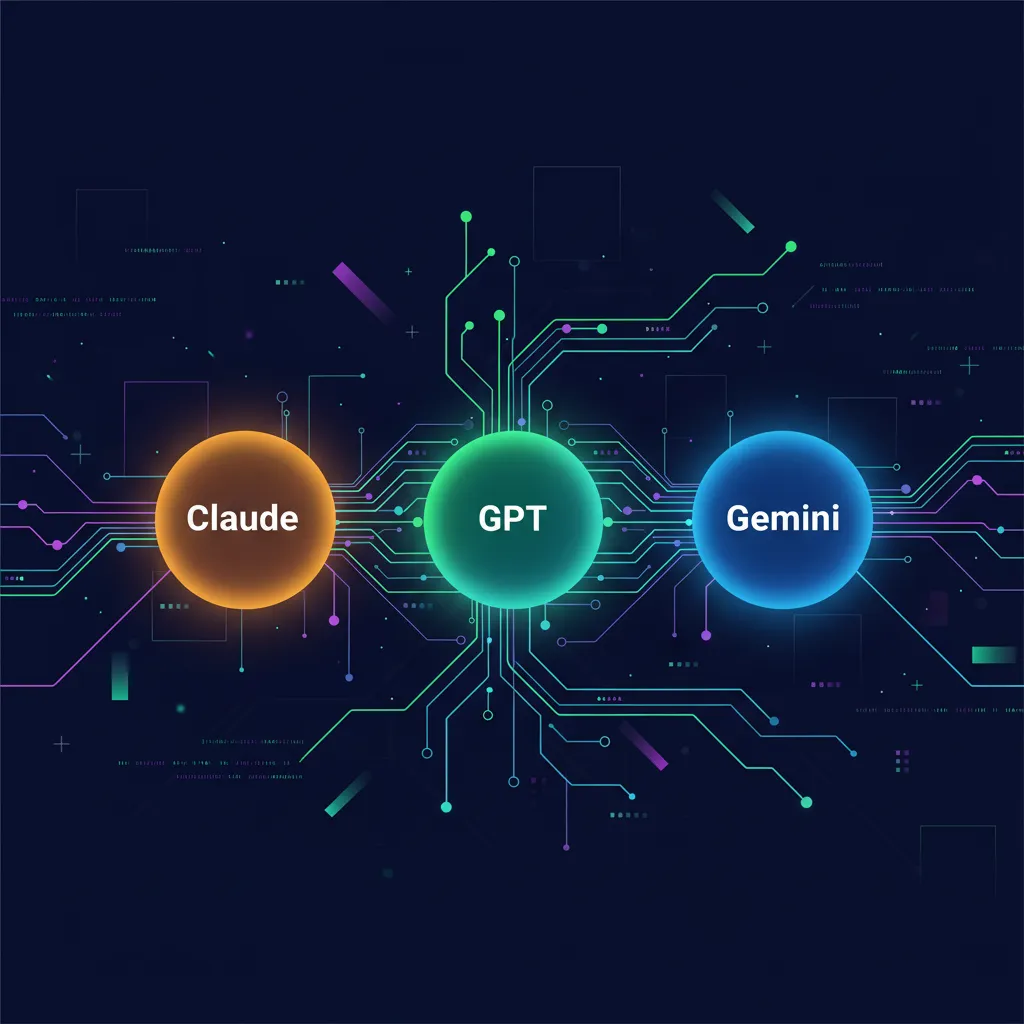
Your AI agent stack needs four layers: foundation models, orchestration frameworks, tool integration, and evaluation and monitoring. Based on the podcast discussions, each layer has different maturity levels and trade-offs, and the technology choices are evolving rapidly. For detailed guidance on choosing between Claude, GPT, and Gemini for each layer, see our AI model selection guide.
Foundation Models
Claude, GPT-4, and Gemini are the primary choices. The podcast guests converge on a practical approach: use the best model for your specific task rather than defaulting to the most powerful option. Claude excels at instruction-following and structured output. GPT-4 has the broadest tool ecosystem. Gemini offers the largest context windows for document-heavy workflows.
Orchestration Frameworks
LangChain, CrewAI, and custom orchestration layers manage multi-step agent workflows. The trend discussed on the podcast: teams are moving from heavy frameworks to thinner orchestration layers as model capabilities improve. MCP (Model Context Protocol) emerged as a promising standard for tool integration.
Tool Integration
Agents need access to external tools: CRMs, databases, APIs, and communication platforms. MCP provides a standardized protocol for this. Block's Goose agent demonstrates the power of MCP: any tool with an MCP server becomes accessible to the agent without custom integration code.
Evaluation and Monitoring
The most underinvested layer. Hamel Husain and Shreya Shankar argue that evaluation infrastructure should receive at least 30% of your agent development budget. Without robust evals, you cannot iterate on agent quality or catch regressions before they reach users.
How Do You Evaluate AI Agent Quality?
Build domain-specific evaluation frameworks with expert-written test cases, continuous regression testing, and failure mode catalogs, and invest at least 30% of your agent budget in this infrastructure. Hamel Husain's central argument on the podcast: most teams invest heavily in building agents but almost nothing in measuring whether those agents actually work. The eval framework he shared has become a reference point across the AI engineering community.
Domain-Specific Test Cases
Generic benchmarks tell you nothing about your agent's performance on your tasks. Build evaluation suites that mirror real user interactions. If your agent handles support tickets, your evals should be actual support tickets with known correct resolutions.
Expert-Written Evaluations
The people who write your evals should be domain experts, not ML engineers. A support team lead knows what a good resolution looks like. A sales manager knows what a qualified lead looks like. Encode their judgment into automated evaluation criteria.
Continuous Regression Testing
Model updates, prompt changes, and new tool integrations can all cause regressions. Run your eval suite on every change. Shreya Shankar emphasized that the biggest agent failures she has seen came from changes that were assumed to be harmless.
Failure Mode Catalogs
Track and categorize every agent failure. Over time, patterns emerge: specific types of queries that confuse the agent, edge cases in tool usage, or hallucination triggers. Each failure mode becomes a new eval test case, creating a feedback loop that continuously improves quality.
Eval Principles from Hamel Husain
- Invest 30% of your agent budget in evaluation. Building without measuring is flying blind.
- LLM-as-judge works when calibrated against human judgment. Use human ratings to calibrate automated evaluators.
- Your eval suite is your competitive moat. The team with better evals ships better agents, faster.
Key Takeaway
Evaluation infrastructure is the most underinvested part of AI agent deployment. Hamel Husain's recommendation to spend 30% of your agent budget on evals is not arbitrary -- teams without robust evaluation frameworks cannot iterate on quality, cannot catch regressions, and end up shipping agents that degrade silently. Your eval suite is your competitive moat.
How Should You Design Human-in-the-Loop Oversight?
Start with full human oversight and progressively reduce it through four phases as confidence grows: full review, confidence-based routing, exception-only review, and continuous monitoring. Every successful agent deployment discussed on the podcast followed this pattern, and the companies that skipped it and went straight to full autonomy all reported significant issues.
Phase 1: Full Review
Every agent action is reviewed by a human before execution. This phase builds the training data and evaluation criteria you need for later phases. It feels slow, but it creates the foundation for reliable autonomy.
Phase 2: Confidence-Based Routing
High-confidence actions execute automatically. Low-confidence actions get human review. The confidence threshold is calibrated using evaluation data from Phase 1. Most teams find that 60-70% of actions can be automated at this stage.
Phase 3: Exception-Only Review
Humans only review edge cases, escalations, and flagged interactions. The agent handles the vast majority of work independently. Intercom's Fin operates at this level, with human agents handling only the 14% of tickets that require human judgment.
Phase 4: Continuous Monitoring
No direct human review, but automated monitoring catches quality degradation. Evaluation suites run continuously. Humans investigate anomalies rather than reviewing individual actions. This is the target state, but few teams have reached it reliably.
Our take
The build vs buy question for AI agents has a clearer answer than most teams admit. If your use case is customer support or sales outreach, buy. Intercom's Fin and similar platforms have years of production data and failure modes already cataloged. Building a custom support agent from scratch means rediscovering every edge case they have already solved. But if your agent needs to understand your specific domain -- your internal processes, your proprietary data, your unique workflows -- building is the only option that gives you the evaluation loop you need. The real mistake is treating this as an all-or-nothing decision. Start with buy for commodity tasks, build for differentiation, and let your evaluation data tell you when to switch.
Explore More AI Strategy Insights
Dive deeper into AI deployment frameworks, product strategy, and growth patterns from top tech leaders.
How Do You Measure AI Agent ROI?
Measure AI agent ROI across four dimensions: cost metrics, quality metrics, speed metrics, and scale metrics, with the real value lying in capabilities that were previously impossible rather than just cost savings. The podcast guests consistently argued that doing the same things cheaper is the least interesting benefit of AI agents.
Cost Metrics
Cost per resolution, cost per qualified lead, cost per processed document. Compare against human baselines. SaaStr reports 90% cost reduction in SDR function. But cost alone misses the story.
Quality Metrics
Resolution accuracy, customer satisfaction (CSAT), error rates. Intercom measures Fin's CSAT independently from human agents. In many cases, agent CSAT matches or exceeds human performance on routine tasks.
Speed Metrics
Time to first response, resolution time, processing throughput. Agents respond in seconds, not hours. For support, this alone drives significant CSAT improvement regardless of resolution quality.
Scale Metrics
Tasks handled per day, concurrent processing capacity, coverage hours. Agents work 24/7 without breaks. SaaStr's AI SDRs send outreach across all time zones simultaneously, something a 10-person team could never do.
If you are building an agency around AI agent deployment rather than internal tools, our AI automation agency playbook covers pricing models, service offerings, and client acquisition. For integrating agents into AI products, our AI product playbook covers moat strategies and go-to-market approaches.
What Organizational Changes Do AI Agents Require?
AI agents require rethinking team structures, roles, and how work gets done, with three organizational models emerging: fast/slow thinking teams, full-stack builders, and dedicated AI leadership. Deploying AI agents is not just a technology decision, and these models from the podcast discussions show how companies are restructuring around agent capabilities.
Airtable's Fast/Slow Thinking Teams
Airtable restructured into two types of teams: "fast" teams that ship iterative improvements quickly, and "slow" teams that tackle deep, complex problems requiring sustained focus. AI agents are deployed primarily in fast teams, handling the high-volume, iterative work while humans focus on the creative and strategic challenges that require slow thinking.
LinkedIn's Full-Stack Builder Model
LinkedIn is moving toward a model where individual engineers own entire features end-to-end, supported by AI agents that handle the tasks that previously required specialized roles. Instead of a frontend engineer, backend engineer, and QA, one builder uses AI agents to cover the full stack.
The Chief AI Officer Role
Asha Sharma discussed the emerging need for a dedicated executive responsible for AI strategy. This role spans technology decisions, organizational change management, and governance. Without centralized leadership, AI agent adoption becomes fragmented and inconsistent across teams.
Organizational Shifts
- The agent manager is a new role. Someone needs to maintain, evaluate, and improve agents the way a manager develops human team members.
- Smaller teams, bigger scope. AI agents enable 5-person teams to do what previously required 20.
- Human roles shift to oversight and strategy. As agents handle execution, humans focus on judgment calls, creative work, and quality assurance.
How Do You Secure and Govern AI Agents?
Secure AI agents through least-privilege access, input sanitization, output validation, audit logging, and rate limiting, because the attack surface for AI agents is fundamentally different from traditional software. Multiple podcast guests highlighted that current AI security measures are less robust than many teams assume, and guardrails alone are not enough.
Guardrails Are Not Enough
Research discussed on the podcast demonstrates that AI guardrails can be bypassed with relatively simple techniques. Relying solely on prompt-level restrictions for security is like relying on a locked screen door. Guardrails reduce accidental misuse but do not prevent determined adversaries.
Prompt Injection Risks
Agents that process external content (emails, documents, web pages) are vulnerable to prompt injection: malicious instructions embedded in the content that hijack the agent's behavior. Any agent that reads user-supplied text needs input sanitization and output validation.
Least-Privilege Access
Give agents the minimum permissions needed for their specific task. An SDR agent needs CRM write access, not database admin privileges. A support agent needs to read account data and process refunds, not modify system configurations. Scope permissions narrowly and audit regularly.
Audit Logging and Monitoring
Log every agent action with full context: the input, the reasoning, the tools used, and the output. This creates an audit trail for compliance, enables post-incident analysis, and provides the data needed to improve agent behavior over time.
Security Checklist
- Treat agent outputs as untrusted input. Validate and sanitize before taking action on agent-generated content.
- Implement rate limiting and cost controls. A runaway agent can generate significant API costs in minutes.
- Test with adversarial inputs. Include prompt injection attempts in your evaluation suite.
Frequently Asked Questions
What is an AI agent vs a chatbot?
A chatbot responds to queries within a conversation. An AI agent takes autonomous action toward a goal, using tools, APIs, and multi-step reasoning. Intercom's Fin, for example, resolves 86% of support tickets without human intervention, going beyond chat to take actions like processing refunds and updating accounts.
How do you evaluate AI agent quality?
Hamel Husain recommends building domain-specific evaluation frameworks rather than relying on generic benchmarks. Create test cases that reflect real user scenarios, measure task completion rates, and track failure modes. Invest at least 30% of your agent development budget in evaluation infrastructure.
Should I build or buy AI agents?
For customer support and sales, proven platforms like Intercom Fin offer faster deployment and battle-tested reliability. For domain-specific workflows where off-the-shelf tools fall short, building custom agents gives you more control over behavior, evaluation, and iteration speed. Start with buy for commodity tasks, build for competitive differentiation.
What is human-in-the-loop AI?
Human-in-the-loop means a human reviews and approves agent actions before execution. This is the recommended starting point for AI agent deployment. As confidence increases and evaluation data accumulates, you progressively reduce human oversight from full review to confidence-based routing to exception-only review.
How much do AI agents cost to deploy?
Costs vary by deployment type. SaaStr reports their 20 AI SDRs cost roughly 10% of the human team they replaced. Intercom's Fin uses per-resolution pricing. For custom-built agents, the primary costs are API calls (typically $0.01-0.10 per interaction), infrastructure, and the engineering time to build and maintain evaluation systems.
Are AI agents secure?
Security remains a significant challenge. Research shows that guardrails can be bypassed, and prompt injection is a real risk for agents with access to sensitive systems. Best practices include least-privilege access, output validation, audit logging, rate limiting, and treating agent outputs as untrusted input that needs verification before action.
Want More Insights from Lenny's Podcast?
Explore the full analysis of Lenny's channel: AI agents, product strategy, and growth frameworks.
View @LennysPodcast Channel AnalysisRelated Guides
10 Skills for Thriving in the Age of AI
Skills that top product leaders and founders say matter most as AI transforms industries.
Product Growth Playbook
35 frameworks from top growth leaders including Elena Verna, Sean Ellis, and Sarah Tavel.
Startup Leadership Playbook
19 frameworks from 67 expert interviews on decision-making, team building, and communication.
Written by
Arun Agrahri
Builder of Taffy. I spend most of my time analyzing YouTube channels to find patterns others miss. These guides are the result of processing thousands of videos and comments through our data pipeline.
Get the next guide first
We publish deep-dive research guides weekly. Be the first to know when new analysis drops.
No spam. Unsubscribe anytime.