Zone 2 Training:
The Complete Protocol
What Peter Attia & Andrew Huberman Actually Recommend
Attia calls Zone 2 "the most important exercise you're not doing." Huberman agrees -- but their protocols differ in key ways. Here are the exact heart rate targets, session structures, and common mistakes pulled from 40+ videos across both channels.
In This Guide

Peter Attia MD
Primary source for Zone 2 protocols
View full channel analysis

Andrew Huberman
Exercise science & endurance
View full channel analysis
1. What Is Zone 2 Training?
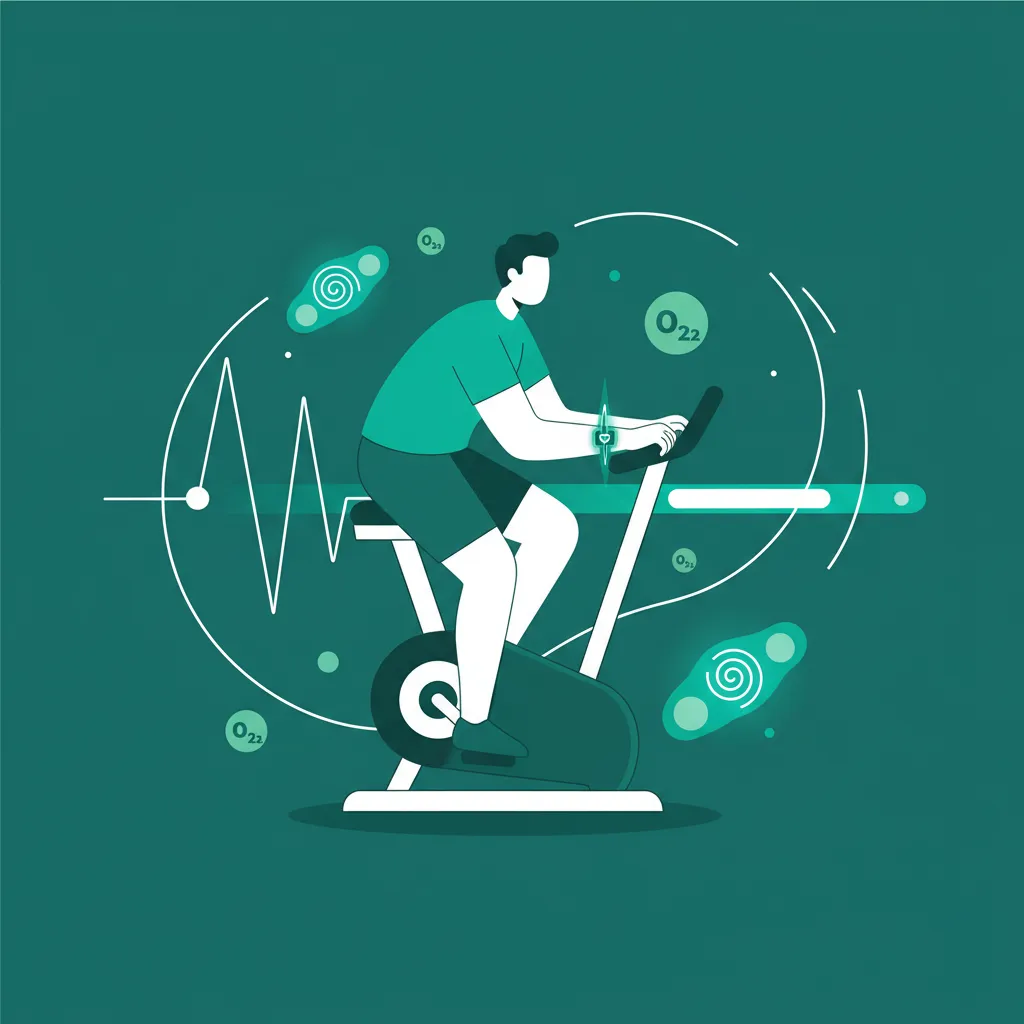
Zone 2 training is low-intensity aerobic exercise performed at 60-70% of your maximum heart rate. It's the intensity where you can maintain a conversation while exercising, but you wouldn't want to sing. Peter Attia calls it "the foundation of the cardio fitness triangle."
The Science Behind Zone 2
Mitochondrial density: Zone 2 training increases the number and efficiency of mitochondria in your muscle cells, improving your body's ability to produce energy aerobically. This is one reason Attia views exercise as more impactful than any longevity supplement.
Fat oxidation: At this intensity, your body primarily uses fat for fuel rather than carbohydrates, maximizing metabolic flexibility.
Capillary development: Sustained low-intensity exercise builds capillary beds within muscles, improving oxygen and nutrient delivery.
Lactate clearance: Training in Zone 2 improves your body's ability to clear lactate, raising the threshold at which you fatigue.
Attia's "Cardio Triangle" Concept
Peter Attia visualizes cardiovascular fitness as a triangle: Zone 2 forms the base and VO2 max is the peak. The goal isn't to maximize height (VO2 max) OR width (Zone 2) alone, but to maximize the total area of the triangle.
Peak = VO2 Max | Base = Zone 2 | Area = Total Fitness
Key Takeaway
Zone 2 is not about pushing harder. It is the only intensity that simultaneously builds mitochondrial density, improves fat oxidation, develops capillary beds, and enhances lactate clearance -- and it should feel almost too easy. If you think you are working out, you are probably above Zone 2.
2. Why Does Zone 2 Matter for Longevity?
Cardiorespiratory fitness is one of the strongest predictors of lifespan, and Zone 2 is the safest way to build it. Both Attia and Huberman emphasize that moving from the bottom 25% to above-average fitness reduces all-cause mortality risk by up to 50%. Pairing Zone 2 with practices like deliberate cold exposure can further enhance metabolic resilience.
Metabolic Health
- + Improves insulin sensitivity
- + Enhances glucose disposal
- + Increases metabolic flexibility
- + Optimizes fat utilization
Brain Health
- + Increases BDNF (brain-derived neurotrophic factor)
- + Improves cerebral blood flow
- + Reduces neuroinflammation
- + Supports cognitive function with age
Why Zone 2 specifically?
As Attia explains: "Zone 2 is unique because it allows you to accumulate volume safely. High-intensity training gives you more adaptation per unit of time, but you can't sustain it. Zone 2 is the cornerstone that allows for sufficient, safe, and consistent training volume."
3. How Do You Find Your Zone 2?
The simplest method is the talk test: you should be able to speak in complete sentences but not sing. One of the most common questions in the comments (22 mentions of "measurement"): "How do I know if I'm actually in Zone 2?" Here are the methods, ranked from simplest to most precise.
The Talk Test (Easiest)
You should be able to speak in complete sentences but not sing. If you're gasping between words, you're too high. If you could easily belt out a song, you're too low.
Nasal Breathing Only
Dr. Andy Galpin (on Huberman Lab) calls nasal breathing a "cheat code" for Zone 2. If you can maintain nasal-only breathing throughout your workout, you're likely in Zone 2.
Heart Rate Monitoring
Zone 2 is typically 60-70% of your maximum heart rate. Use the formula 220 - age for a rough max HR estimate, or get tested for precision.
Example (Age 40):
- Max HR estimate: 220 - 40 = 180 bpm
- Zone 2 range: 108-126 bpm (60-70%)
Lactate Testing (Most Precise)
The gold standard. Zone 2 is defined as the highest intensity where blood lactate stays below 2 mmol/L. Requires a lactate meter and finger prick tests.
Common mistake from comments
Many viewers ask: "I feel like I'm barely working out - is that right?" Yes. Zone 2 should feel almost too easy. Attia notes that most people train too hard, thinking they're in Zone 2 when they're actually in Zone 3 or higher.
Explore Peter Attia's Full Channel
Search across every episode of The Peter Attia Drive -- find specific protocols, guest recommendations, and deep dives on longevity science.
4. How Long and How Often Should You Do Zone 2?
Aim for 150-200+ minutes per week, split across 3-4 sessions of 45-60 minutes each. The most common questions (41 mentions of "duration," 4 of "frequency"): How long? How often? Here's what Attia and Huberman recommend.
The Weekly Target
Session Guidelines
- + Minimum: 30 minutes steady state
- + Ideal: 45-60 minutes
- + Maximum benefit: 90 minutes (diminishing returns after)
- + Key: Steady state, not intervals
Weekly Structure
- + Minimum: 3x 45-50 min = 135-150 min
- + Better: 4x 45-60 min = 180-240 min
- + Optimal: 3-4 Zone 2 + 1 VO2 max session
- + Plus: 2-4 strength training sessions
Attia's Sample Week
| Day | Activity | Duration |
|---|---|---|
| Monday | Lower body strength | 60 min |
| Tuesday | Zone 2 (bike/treadmill) | 45-60 min |
| Wednesday | Upper body strength | 60 min |
| Thursday | Zone 2 (bike/treadmill) | 45-60 min |
| Friday | Stability / mobility | 45 min |
| Saturday | Zone 2 (longer session) | 60-90 min |
| Sunday | VO2 max intervals OR Zone 2 | 30-45 min |
Our take
We have read through hundreds of comments asking about Zone 2 duration, and the most important thing Attia says gets buried: the minimum is 30 minutes at steady state, not 30 minutes total including warmup. Most people count their warmup and cooldown, which means they are getting maybe 20 minutes of actual Zone 2 stimulus. That is probably not enough to drive meaningful mitochondrial adaptation. If you only have 30 minutes, you are better off doing a proper 30-minute Zone 2 session than a 45-minute session with 15 minutes of warmup and cooldown in the middle.
5. What Are the Best Exercises for Zone 2?
Stationary cycling and treadmill walking are the best modalities because they allow precise, uninterrupted steady-state effort for 45+ minutes. 34 comments mentioned specific modalities. The key criterion: can you maintain steady-state effort for 45+ minutes without interruptions?
Stationary Bike
BestAttia's preferred modality. Allows precise power output control, no terrain variables, easy to maintain steady state.
- + Precise wattage control
- + No weather/traffic interruptions
- + Easy on joints
Treadmill
BestWalking at incline or easy jogging. Set speed and incline, then maintain. Great for those who prefer weight-bearing exercise.
- + Weight-bearing (bone health)
- + Consistent pace control
- + Incline walking is underrated
Rowing Machine
GoodFull-body engagement. Requires good technique to maintain steady state without spiking heart rate.
- + Full body workout
- + Low impact
- - Technique-dependent
Swimming
GoodExcellent low-impact option. Harder to monitor heart rate. Requires consistent stroke to maintain Zone 2.
- + Zero impact
- + Full body
- - HR monitoring difficult
Rucking
GoodWalking with a weighted backpack. A commenter asked specifically about this. Works well if you maintain steady pace.
- + Functional strength + cardio
- + Outdoors option
- - Terrain can cause HR spikes
Outdoor Cycling
HarderAttia notes this is challenging for Zone 2 due to hills, traffic, and stops. Better for VO2 max intervals.
- + Enjoyable, outdoors
- - Hills disrupt steady state
- - Traffic stops reset HR
Can I mix modalities in one session?
A viewer asked: "Is it alright to use different modalities in Zone 2 for the same workout? For example - 20 minutes of stairmaster, 20 minutes of rowing, 20 minutes of treadmill?" Yes, this works fine as long as you maintain Zone 2 throughout. The key is continuous steady-state effort, not the specific modality.
6. What Are the Most Common Zone 2 Mistakes?
The biggest mistake is going too hard -- if you feel like you're "getting a good workout," you're probably in Zone 3 or higher. Based on comment analysis and what Attia and Huberman repeatedly address, most people train at too high an intensity, thinking they're in Zone 2 when they're actually above it.
Going Too Hard
The most common mistake. If you feel like you're "getting a good workout," you're probably in Zone 3+. Zone 2 should feel almost too easy, especially at first.
Sessions Too Short
20-minute Zone 2 sessions don't provide the same mitochondrial adaptations. Attia emphasizes a minimum of 30 minutes steady state, with 45-60 minutes being ideal.
Using Only Heart Rate Formulas
The 220-age formula is a rough estimate. Individual max heart rates vary significantly. Use feel (talk test) to calibrate, or get properly tested.
Inconsistent Intensity
Outdoor activities with hills, stops, or variable terrain don't count as Zone 2 if your heart rate is constantly spiking and recovering. Steady state is key.
Skipping Zone 2 for HIIT
HIIT is time-efficient but doesn't build the same aerobic base. The 80/20 rule exists for a reason: most of your cardio volume should be Zone 2.
7. How Should You Combine Zone 2 and VO2 Max Training?
Follow the 80/20 rule: 80% of your cardio time should be Zone 2 and 20% should be VO2 max intervals. A common question: "VO2 Max after Zone 2? Seems backwards." Here's how Attia structures the relationship between these two types of training.
The 80/20 Rule
This ratio applies to total training time. If you do 4 hours of cardio per week, 3+ hours should be Zone 2 and ~45 minutes should be high-intensity VO2 max work.
Zone 2 Sessions
- + 45-60 minutes steady state
- + 3-4 times per week
- + Should feel sustainable
- + Build base, not performance
VO2 Max Sessions
- + 4x4 minutes at max sustainable effort
- + 1x per week (maybe 2)
- + Should be very hard
- + Build peak capacity
Sample VO2 Max Protocol (from Attia)
The "4x4" Protocol:
- Warm up for 10 minutes at easy pace
- 4 minutes at maximum sustainable effort (can barely speak)
- 4 minutes recovery (easy Zone 2 pace)
- Repeat 4 times
- Cool down for 5-10 minutes
Total time: ~35-40 minutes. Do this 1x per week, separate from Zone 2 days if possible.
8. FAQ from 186 Comments
Real questions from Huberman and Attia viewers, answered based on what they've said across 40+ videos.
How do I know what my Zone 2 is for a female 60 years old? ▼
The same methods apply regardless of age or gender: talk test (can speak in sentences, can't sing), nasal breathing only, or 60-70% of max heart rate. For a 60-year-old, the rough HR estimate would be (220-60) x 0.6-0.7 = 96-112 bpm. However, individual variation is significant. Start with the talk test and calibrate from there. For a complete protocol tailored to older adults, see our exercise over 50 guide.
I thought Zone 2 cardio was better for women in their mid 40's to 50's? ▼
Zone 2 is beneficial for everyone at any age, but it may be especially important during perimenopause and menopause when metabolic changes occur. Both Zone 2 AND strength training are critical during this phase. Attia emphasizes that the combination of aerobic base-building (Zone 2) plus resistance training is optimal for longevity at any age, with particular importance for women experiencing hormonal transitions.
Is rucking a good way to do Zone 2? ▼
Yes, rucking can be an excellent Zone 2 modality. The key is maintaining steady-state effort without heart rate spikes from hills or uneven terrain. A viewer mentioned rucking 200+ minutes per week with 20% body weight at 4 MPH. This can work well for Zone 2 if the pace keeps your heart rate in the target range. Monitor with the talk test or heart rate to ensure you're not exceeding Zone 2 intensity.
Does it matter if Zone 2 is split over shorter sessions? ▼
For optimal mitochondrial adaptations, longer continuous sessions (45+ minutes) are preferable. Attia emphasizes a minimum of 30 minutes steady state per session. Splitting into 2x20 minute sessions won't provide the same benefits as 1x40 minutes. That said, some Zone 2 is better than none. If time is limited, do what you can, but aim to get at least some longer sessions in each week.
How do different meds affect VO2 Max and Zone 2 training? ▼
Beta blockers specifically lower heart rate, which affects heart rate-based zone calculations. If you're on beta blockers, heart rate zones become unreliable. Use the talk test or perceived exertion instead. ACE inhibitors generally don't significantly affect training zones. Always consult your doctor about how your specific medications might affect exercise capacity and zone calculations.
Is marathon training a way to achieve higher VO2 max? ▼
Marathon training does improve VO2 max, but it's not the most efficient way. Marathon training is predominantly Zone 2 with some tempo work, which builds a massive aerobic base but may not maximize VO2 max as effectively as dedicated high-intensity intervals. For longevity purposes, the Zone 2 volume from marathon training is excellent, but you'd still benefit from dedicated VO2 max sessions (like 4x4 intervals).
Why does it matter whether you've passed through Zone 2 for 45 min total vs. been steady state for 45 min? ▼
The mitochondrial adaptations from Zone 2 training require sustained metabolic stress. When you spike into Zone 3+ and then recover back down, you're not maintaining the specific metabolic conditions that drive Zone 2 adaptations. Think of it like cooking at a specific temperature: you need sustained heat, not cycling between hot and cold. Continuous steady-state effort keeps your body in the fat-oxidation, lactate-clearing state that builds mitochondrial density.
Want to research your own topics across these channels?
Taffy lets you search transcripts, analyze comments, and extract insights from any YouTube channel. Find out what creators are actually saying about topics you care about.


Written by
Arun Agrahri
Builder of Taffy. I spend most of my time analyzing YouTube channels to find patterns others miss. These guides are the result of processing thousands of videos and comments through our data pipeline.
Get the next guide first
We publish deep-dive research guides weekly. Be the first to know when new analysis drops.
No spam. Unsubscribe anytime.