The Vibe Coding Playbook: Build Apps Without Writing Code
Josh Pigford built an app in 8 days and sold it for $15,000 — without writing a single line of code. He's not an outlier. Across 25 Greg Isenberg videos, a pattern emerged: non-technical founders are shipping faster than developers. Here's the philosophy, the tools, and the 7-day playbook they use.

What Is Vibe Coding?
Vibe coding is a term coined by OpenAI co-founder Andrej Karpathy in February 2025. Collins Dictionary named it the Word of the Year for 2025.
"A new kind of coding where you fully give in to the vibes, embrace exponentials, and forget that the code even exists."
Instead of writing code line by line, you describe what you want in plain English. AI tools like Replit, Bolt, and Claude write the code for you. You accept suggestions, iterate on the output, and ship fast.
The result? Non-technical founders are now building sophisticated apps faster than traditional developers. Y Combinator reports that 25% of their Spring 2025 batch consisted of companies with codebases that were over 95% AI-generated.
Why This Matters for Non-Technical Founders
- No coding bootcamp required. Start building today.
- Validate ideas in days, not months.
- The skill of shipping compounds. Each app teaches you something new.
What Is the Vibe Coding Philosophy?
The vibe coding philosophy is built on five core principles: ship fast and iterate faster, build in public on Twitter/X, focus on one core action, prioritize distribution over product, and use AI as a research assistant rather than a replacement. Greg Isenberg and his guests have articulated these across 25+ videos as the principles that separate successful vibe coders from those who never ship:
Ship Fast, Iterate Faster
Don't hold code too precious in the AI age. Code is now disposable; the learning comes from rapid iteration and version increments. The single biggest insight: embrace exponentials, forget the code exists.
Build in Public on Twitter/X
Public commitment creates urgency and drives organic visibility. Josh Pigford built in public, tweeting progress updates. This accountability hack turns shipping into content and content into traction.
Simple Experiences Beat Complex Ones
For consumer apps, focus on one core action and nail the onboarding experience before adding features. The most successful apps (NGL, Locket, Cal A.I.) are radically simple.
Distribution > Product
Building an audience before or while building products dramatically increases success rates. A great product with no distribution dies. A mediocre product with great distribution can iterate to success.
Use AI as Research Assistant, Not Replacement
AI excels at synthesis and analysis but requires human oversight and specific prompting. The best vibe coders understand AI's limitations and use it strategically for drafting, not decision-making.
Our take
Principle #4 — distribution over product — is the one most vibe coders ignore. We see it constantly in the data: technically impressive apps that nobody uses because the builder spent 100% of their energy on features and 0% on getting it in front of people. The founders who flip apps for profit (like Josh Pigford) spend more time on Twitter than in their code editor. For the distribution side, our rapid startup guide covers the build-and-flip framework.
What Tools Do You Need for Vibe Coding in 2025?
The essential vibe coding tools for 2025 are Replit AI Agent for full-stack development from natural language, Bolt by StackBlitz for in-browser prototyping, Claude for code generation and complex requirements, and Cursor for developers who want more control. These are the tools mentioned most frequently across Greg Isenberg's videos:
AI Development Platforms
Replit AI Agent
28 mentionsFull-stack development from natural language. Describe your app, Replit builds it. Best for complete beginners who want end-to-end solutions.
Bolt by StackBlitz
8 mentionsIn-browser development environment. Eric Simons (Bolt founder) featured on Greg's channel. Emphasizes the browser-first, instant-preview workflow.
Claude
25 mentionsAnthropic's AI assistant. Used for code generation, debugging, and the "vibe marketing" workflow with Dan Koe. Particularly good at understanding complex requirements.
Cursor
Mentioned in tool comparisonsAI-powered code editor. More control than Replit/Bolt, but requires some coding familiarity. Good for those who want to understand what's being generated.
Supporting Tools
Research
- Manus AI (18)
- Perplexity (10)
- ChatGPT (15)
Automation
- n8n (10)
- VAPI (12)
- Gum Loop (3)
Content
- Sora 2 (8)
- Resend (6)
- SuperX (5)
AI Models
- DeepSeek (4)
- OpenRouter (3)
- LiveKit (2)
Which Tool Should You Start With?
- Complete beginner, no code ever: Start with Replit AI Agent
- Want more control, some tech comfort: Try Bolt or Cursor
- Building AI features specifically: Use Claude directly
- Automating workflows: n8n for no-code, VAPI for voice
Key Takeaway
Start with Replit if you've never coded. Start with Cursor if you have some technical comfort. The tool matters less than actually shipping something this week.
See what Greg Isenberg's audience is building
Search Late Checkout transcripts for app ideas, revenue numbers, and shipping strategies.
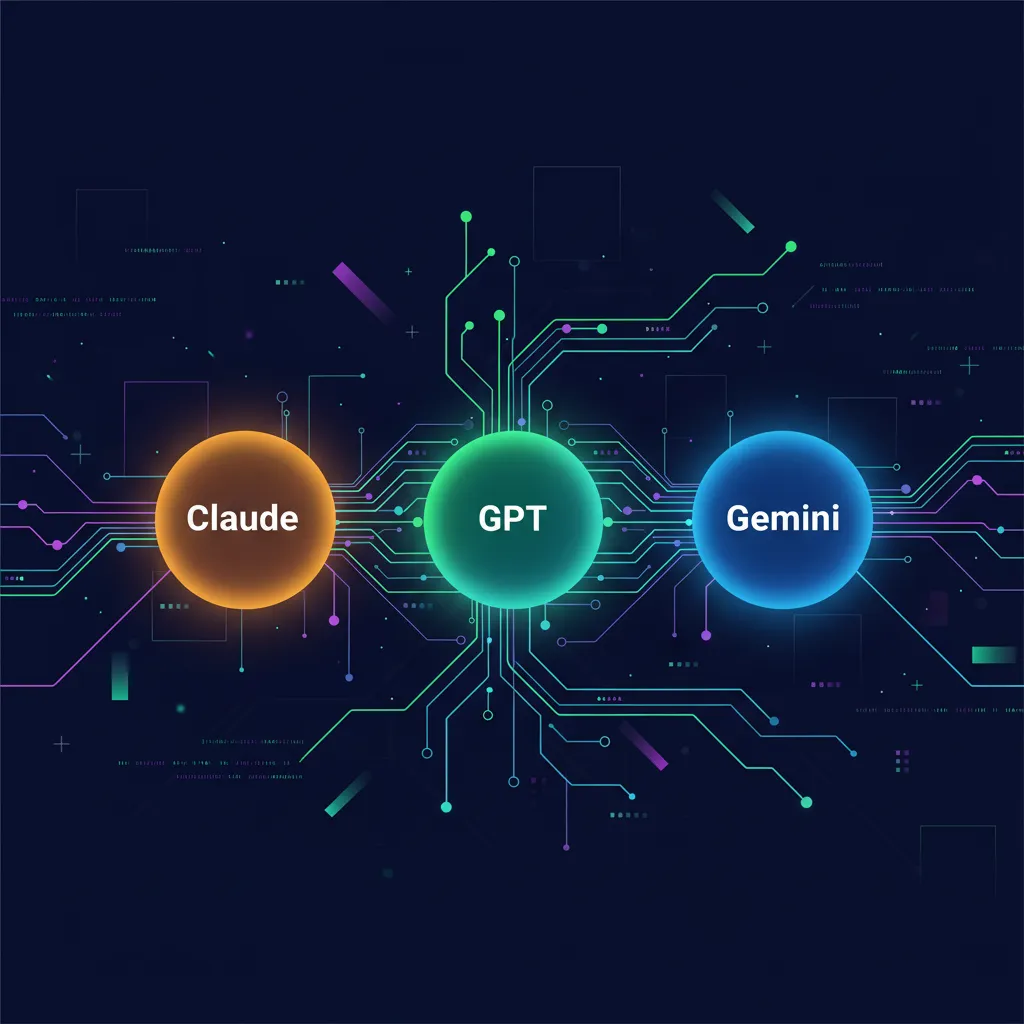
When choosing which AI model to use in your vibe coding workflow, our AI model selection guide breaks down the practical differences between Claude, GPT, and Gemini for coding tasks.
How Do You Build and Ship an App in 7 Days?
You build and ship an app in 7 days by following this sequence: validate on day 1, build the core feature on day 2, deploy on day 3, get first users on day 4, iterate on day 5, add monetization on day 6, and decide whether to scale or sell on day 7. This framework is based on Josh Pigford's NameSnag case study (built and sold in 8 days for $15,000):
Idea Validation (2-3 hours)
Use Manus AI or Perplexity to research your idea. Look for: existing competitors, target audience size, willingness to pay. If you can't find anyone complaining about the problem on Reddit or Twitter, reconsider.
Build the Core Feature (4-6 hours)
Open Replit or Bolt. Describe your app in plain English: "Build me a tool that [solves X problem] for [target user]." Focus on the ONE core action. No auth, no settings, no extras.
Polish & Deploy (3-4 hours)
Add basic styling (Replit/Bolt handle this). Get a domain (short, catchy names outperform descriptive names). Deploy to production. Don't overthink it.
First Users (2-3 hours)
Post on Twitter/X with a screen recording. Share in relevant communities. Get 10 people to try it. Watch for: what confuses them, what they ask for, what they complain about.
Iterate Based on Feedback (4-5 hours)
Fix the top 3 issues. Add the most-requested feature (if it's simple). Don't add everything. Keep iterating with AI assistance.
Add Monetization (2-3 hours)
Simple paywall or subscription. Stripe integration (Replit has templates). Don't overthink pricing. Pick a number, ship it, adjust later.
Decide: Scale or Sell (2 hours)
If you got paying users: consider scaling. If not: list on Acquire.com, Flippa, or Microns. Selling quickly for small money often beats holding for potential big money.
Key Insight from Josh Pigford
"I could have held onto NameSnag for $100K+, but selling in 8 days for $15K let me move on to the next thing. The learning compounds faster when you ship more."
What Are the Counter-Intuitive Truths About Vibe Coding?
The most counter-intuitive truth about vibe coding is that non-technical founders can now build faster than developers, because they don't overthink the code. These insights from Greg Isenberg's content challenge conventional wisdom about building software:
Non-technical founders can build faster than developers
Conventional wisdom: You need coding skills or a technical co-founder to build software products.
Reality: Multiple examples of non-coders building and selling apps using Replit, Bolt, and AI assistants. They ship faster because they don't overthink the code.
Selling quickly for small money beats holding for big money
Conventional wisdom: Grow your project to maximize its value before selling.
Reality: Josh's strategy of selling NameSnag in 8 days for $15K freed him to build more. The learning from shipping 10 projects > the potential from holding 1.
AI content workflows actually enhance authenticity
Conventional wisdom: AI-generated content is generic and lacks personal voice.
Reality: Dan Koe's system uses AI to interview himself, extracting his actual perspective into structured content. The AI becomes a thought-organizing tool, not a replacement.
Short, catchy names outperform descriptive names
Conventional wisdom: Your brand name should clearly communicate what you do.
Reality: NGL, Bags, Locket, Cal A.I. Short, memorable names work better than descriptive alternatives. Clarity comes from the product, not the name.
Voice AI can outperform humans at phone-based negotiations
Conventional wisdom: Complex negotiations require human empathy and adaptability.
Reality: Voice AI negotiated 800+ watch deals in a single day, gathering structured data efficiently. Consistency and patience at scale beat human fatigue.
Before building, make sure your idea has real demand. Our idea validation playbook shows how to test demand in 2-4 weeks.
What Should You Build First?
You should build something you personally want, starting with micro-SaaS tools, simple mobile apps, AI wrappers, or automation workflows — all of which can be completed in under a week. Based on the most discussed app categories in Greg's videos, here are the high-opportunity areas for first-time vibe coders:
Micro-SaaS Tools
Small, focused tools that solve one problem. Name generators, domain checkers, email finders. Low competition, quick to build, easy to sell.
Simple Mobile Apps
Single-purpose apps with viral potential. Widget apps, social games, anonymous messaging. Focus on the core action, nail the onboarding.
AI Wrappers
Take an AI API and wrap it in a specific use case. AI for [industry], AI writing for [niche], AI analysis for [data type]. Speed matters more than originality.
Automation Workflows
Connect tools people already use. Zapier-like automations for specific industries. Sell as done-for-you service, then productize.
The Best First Project
Build something you personally want. The most successful vibe coders build tools they'd use themselves. You understand the problem deeply, you're motivated to finish, and you're the first user for feedback.
Common Questions (from 8,000+ Comments)
We analyzed 8,121 comments from Greg Isenberg's videos. Here are the most frequently asked questions:
How do I actually build apps without coding experience?
Start with Replit AI Agent or Bolt. Describe your app in plain English. Accept the generated code, test it, and iterate. You don't need to understand the code to ship. The skill comes from shipping repeatedly, not from studying documentation.
How do I get my app on the app stores?
For web apps, deploy directly from Replit or Vercel. For mobile apps, Replit can generate iOS/Android exports. The app store submission process has tutorials in each platform. Focus on shipping first; distribution is a separate skill to learn after.
How do I price my app?
Pick a number and ship. $5-10/month for micro-SaaS, $20-50/month for more complex tools. The data shows that apps with higher prices (upper quartile) are growing faster than the median. You can always adjust pricing later based on conversion rates.
Should I build myself or hire a developer?
In 2025, try building yourself first. The learning is worth more than the time saved by hiring. If you can't get something working after 3-4 hours, then consider getting help. But most vibe coding projects are achievable by complete beginners.
How do I sell my app if I don't want to scale it?
List on Acquire.com for larger projects ($50K+), Flippa for mid-range ($5K-50K), or Microns for smaller projects ($200-$10K). Document your traffic, revenue (if any), and tech stack. Buyers want predictable growth and clean handoff.
Want More Insights from Greg Isenberg?
Explore the full analysis of Greg's channel: top themes, viewer questions, superfan patterns, and content opportunities.


Written by
Arun Agrahri
Builder of Taffy. I spend most of my time analyzing YouTube channels to find patterns others miss. These guides are the result of processing thousands of videos and comments through our data pipeline.
Get the next guide first
We publish deep-dive research guides weekly. Be the first to know when new analysis drops.
No spam. Unsubscribe anytime.